A day exploring how digital twins connect product design, visualisation and the next generation of creative content.
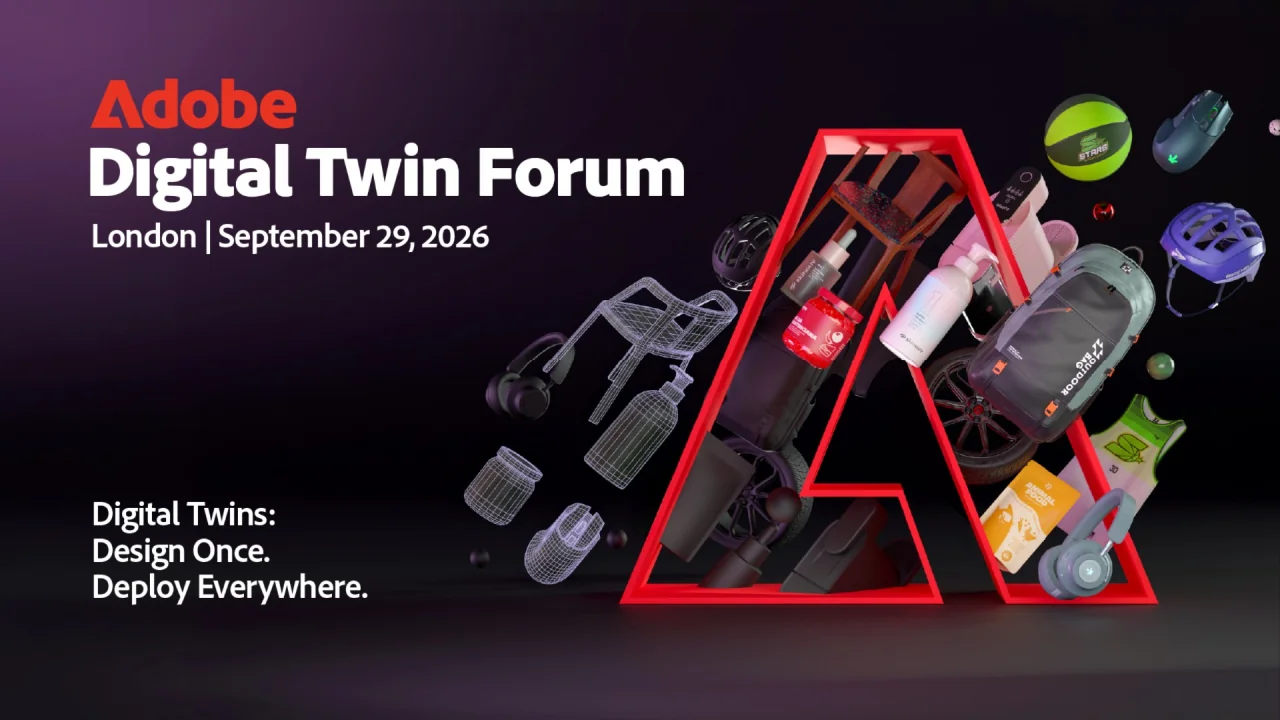
Adobe Digital Twin Forum event artwork. Artwork by Adobe.
Vertexel Studio attended the Adobe Digital Twin Forum in London on 29 September 2026. The event brought digital product creation into focus, with presentations spanning 3D workflows, visualisation and the ways a digital asset can be used beyond its original brief.
For a studio working with product and spatial digital doubles, it was a relevant opportunity to explore where these workflows are heading. The photographs here are from our visit.
From a product to a reusable digital asset
A digital representation of a product can become the starting point for many outputs: a still image, a film, a configurator or an immersive experience. The value comes from preserving the product’s form, materials and identity as it moves between those uses.
This connects with Adobe’s wider work on digital twins. Its Substance 3D update published in July describes workflows that connect CAD data to digital twins, using standards such as USD and OpenPBR to support exchange between tools and more consistent materials.
Ideas from across the creative industries
The sessions brought together perspectives from Adobe, Decathlon, JLR and Foster + Partners. Adobe’s opening demonstrations explored Substance and newer Firefly-assisted workflows. Decathlon’s session focused on footwear design and how digital texturing supports its everyday creative process.
Foster + Partners closed the talks with architectural visualisation, showing how carefully captured materials contribute to detailed scenes and renders. These sessions are also described in Tia Whitehead’s event recap, shared by n-fuze. Across the different industries, the common thread was clear: better digital assets create more possibilities for design and communication.
The power of Substance: one product, many possibilities
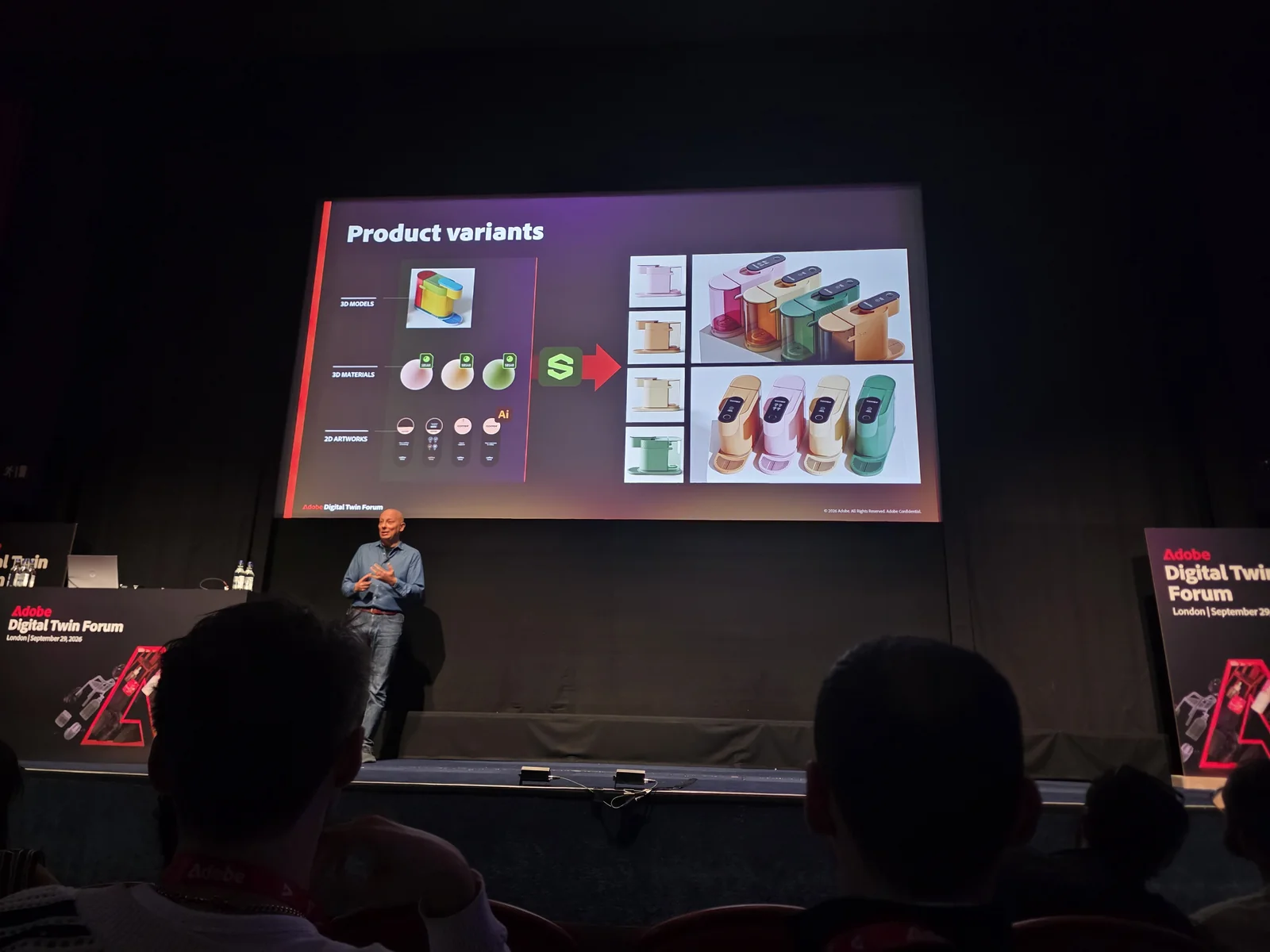
The product-variants presentation showed how a 3D model, digital materials and 2D artwork can come together to create a family of visual options. Changing colours, finishes and graphics gives the same product a different expression while keeping its underlying shape consistent.
For product visualisation, that opens up a practical way to explore a range before producing every physical variation, then use those assets across imagery and interactive experiences.
Exploring the power of Substance: one product, multiple colours, materials and artwork variations.
From physical surfaces to digital materials
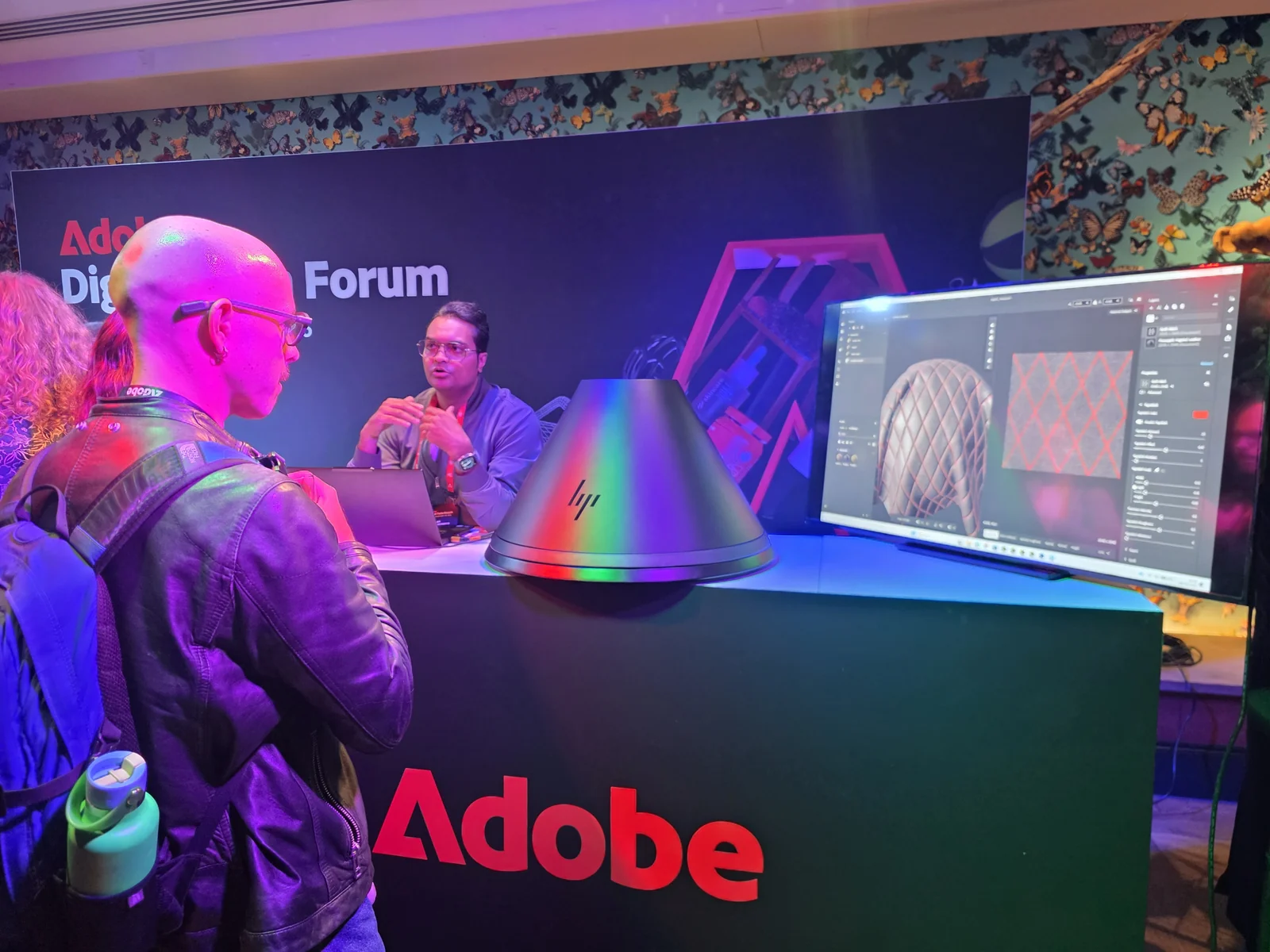
On the demonstration floor, HP’s scanning technology showed another part of the digital-twin workflow: capturing the surface of a real material and bringing it into Substance 3D Sampler.
HP Z Captis integrates with Substance 3D Sampler to turn physical samples into digital materials. Those captures can be refined and varied in Sampler, then applied to 3D products. For us, it highlights why convincing visualisation depends on the finish and texture as much as the shape.
HP material scanning technology on show, working with Adobe Substance 3D Sampler.
Automotive visualisation on stage
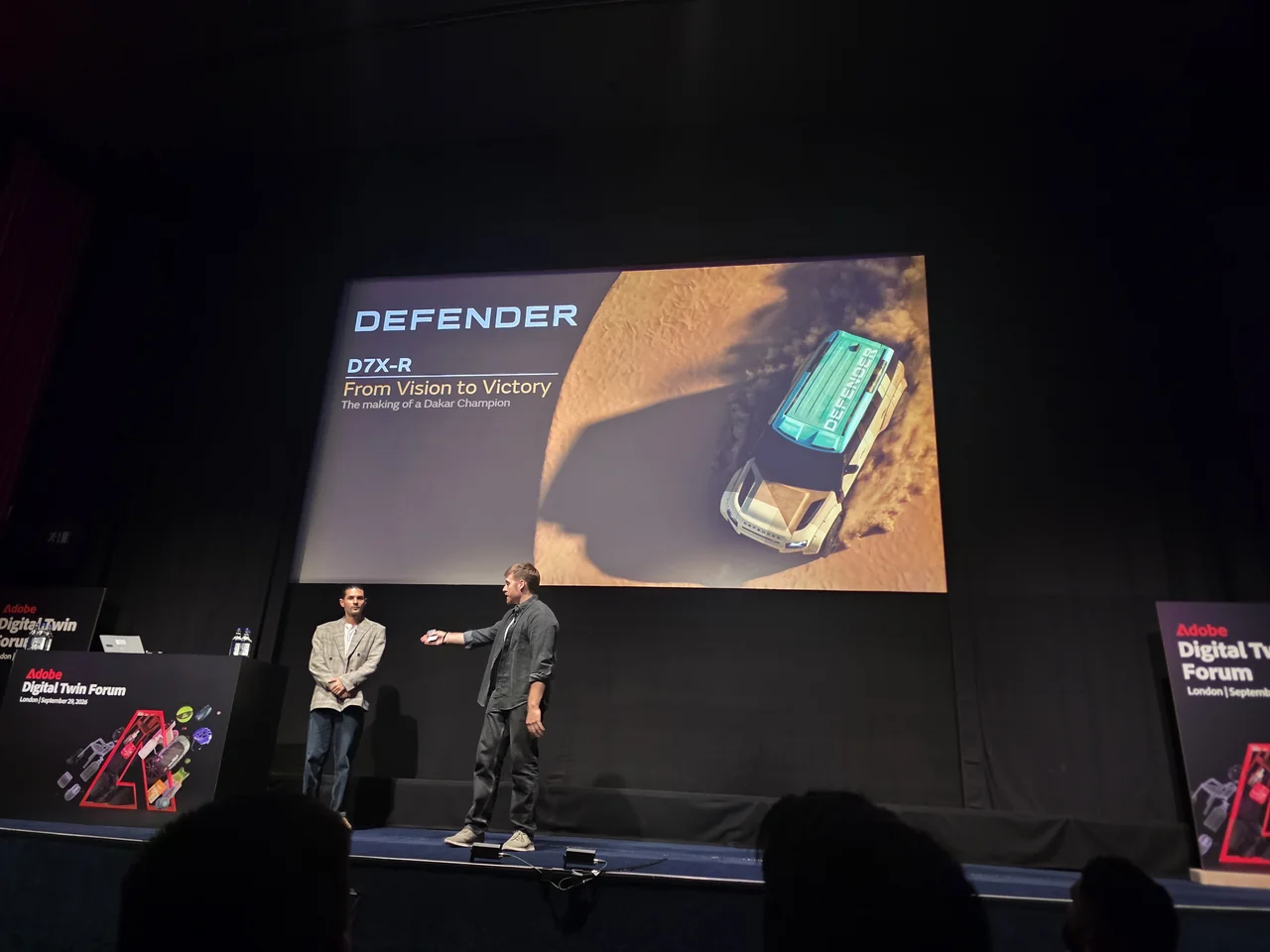
JLR’s Hossein Alfidehfard and Carles Folch presented their Defender project, with Folch identified in the pre-event announcement as the project lead. The session was titled Defender D7X-R: From Vision to Victory - The making of a Dakar Champion, as shown in our photograph. It offered a look at the texturing and simulation work behind the project, connecting digital production with the finished vehicle imagery.
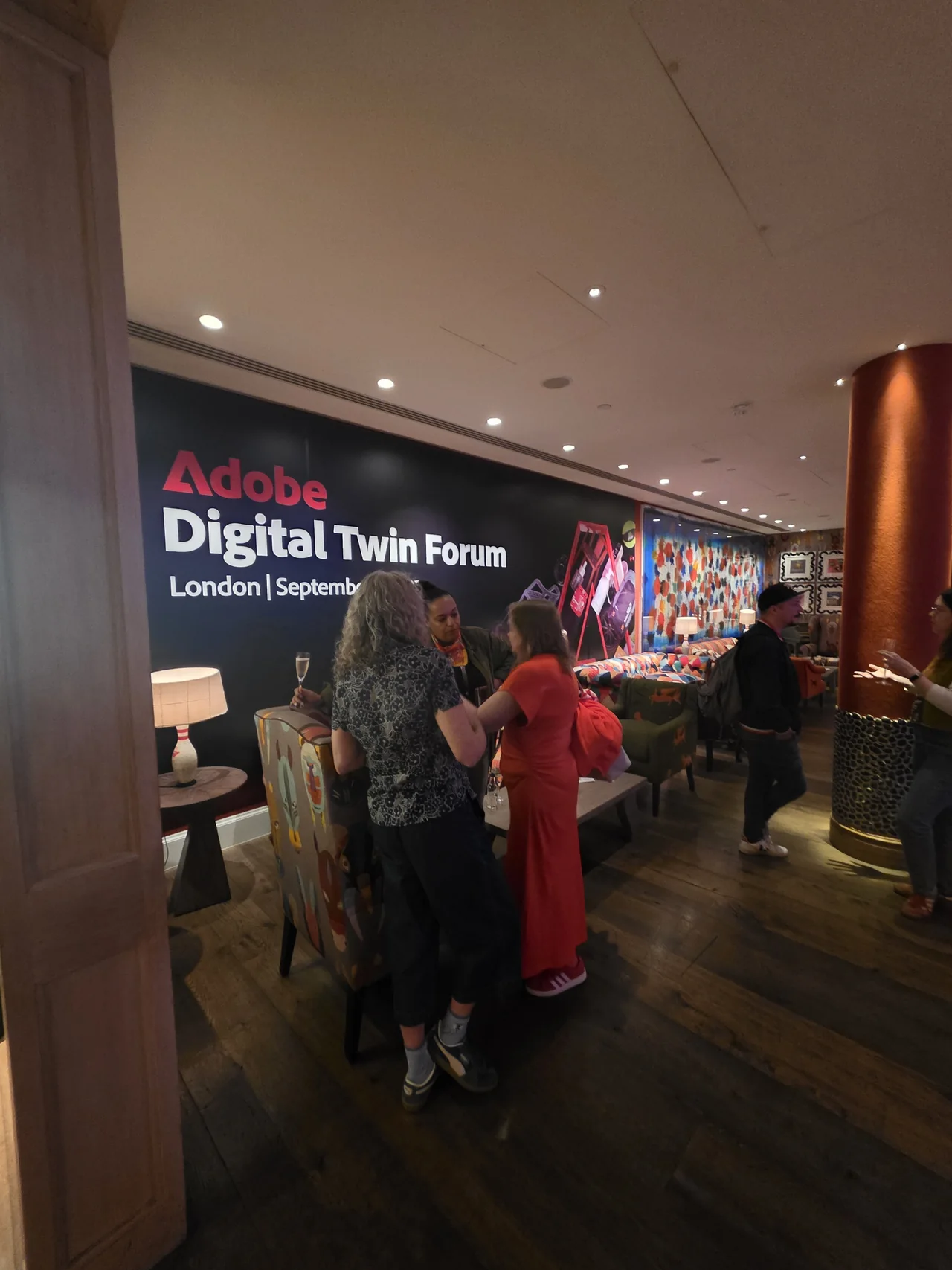
The JLR presentation: Defender D7X-R - From Vision to Victory.Away from the stage, in the forum’s reception area.
That addresses a practical challenge: making detailed work available to someone who does not have the original authoring tools. For client reviews and interactive product experiences, the delivery of an asset matters alongside its creation.
A creative setting at Ham Yard Hotel
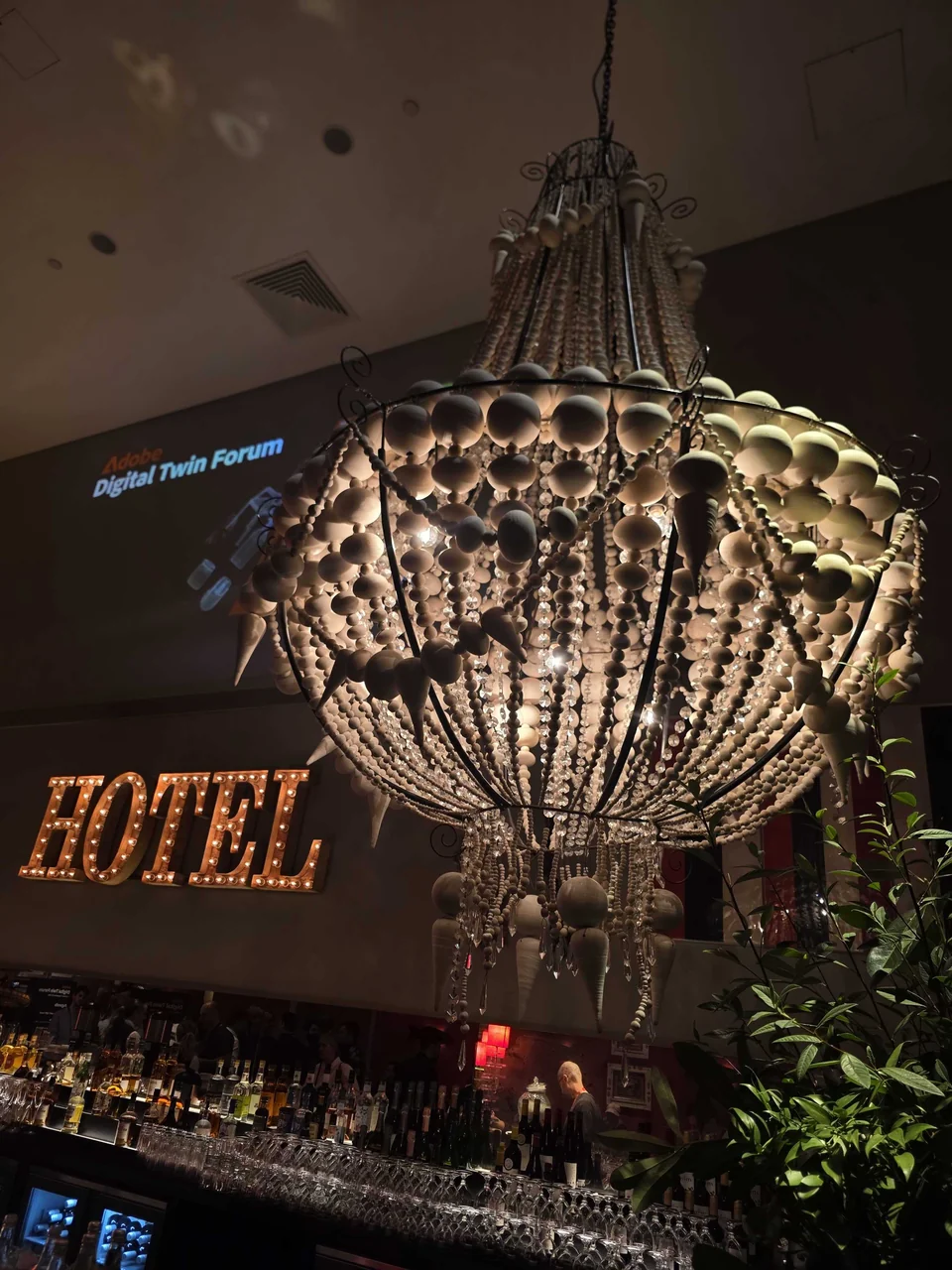
The setting was Ham Yard Hotel in Soho, London. Its distinctive Dive Bar - recognisable in our photograph by the oversized beaded chandelier and illuminated HOTEL sign - brought real character to the day. The warm lighting and richly detailed interiors made a beautiful backdrop for an event focused on design and creativity.
With the Adobe Digital Twin Forum branding projected above the bar, the setting felt part of the experience: a chance to step away from the screen and appreciate real-world materials, texture and detail.
The chandelier and illuminated HOTEL sign in Ham Yard Hotel’s Dive Bar, Soho.
Why it matters to Vertexel
Our approach starts with building useful digital doubles of real products and places. The next step is putting those assets to work across imagery, visualisation, configurators, AR, VR and virtual production.
The forum’s focus fits that approach: treating the digital asset as a foundation for ongoing creative work. We’ll continue exploring how connected tools and reusable assets can give our clients more ways to show, explain and experience what they create.
Event photographs by Vertexel Studio. Presentation imagery belongs to its respective creators.