Explore the layout
Bring rooms, access routes and relevant object positions into one visual model, with views that help explain their spatial relationships.
 VERTEXELSTUDIO
Make complex scenes easier to understand.
Reconstruct a location in 3D from supplied photographs, plans, measurements and scan data. Bring spatial relationships, viewpoints and sequences into a clear visual format.
Discuss a reconstruction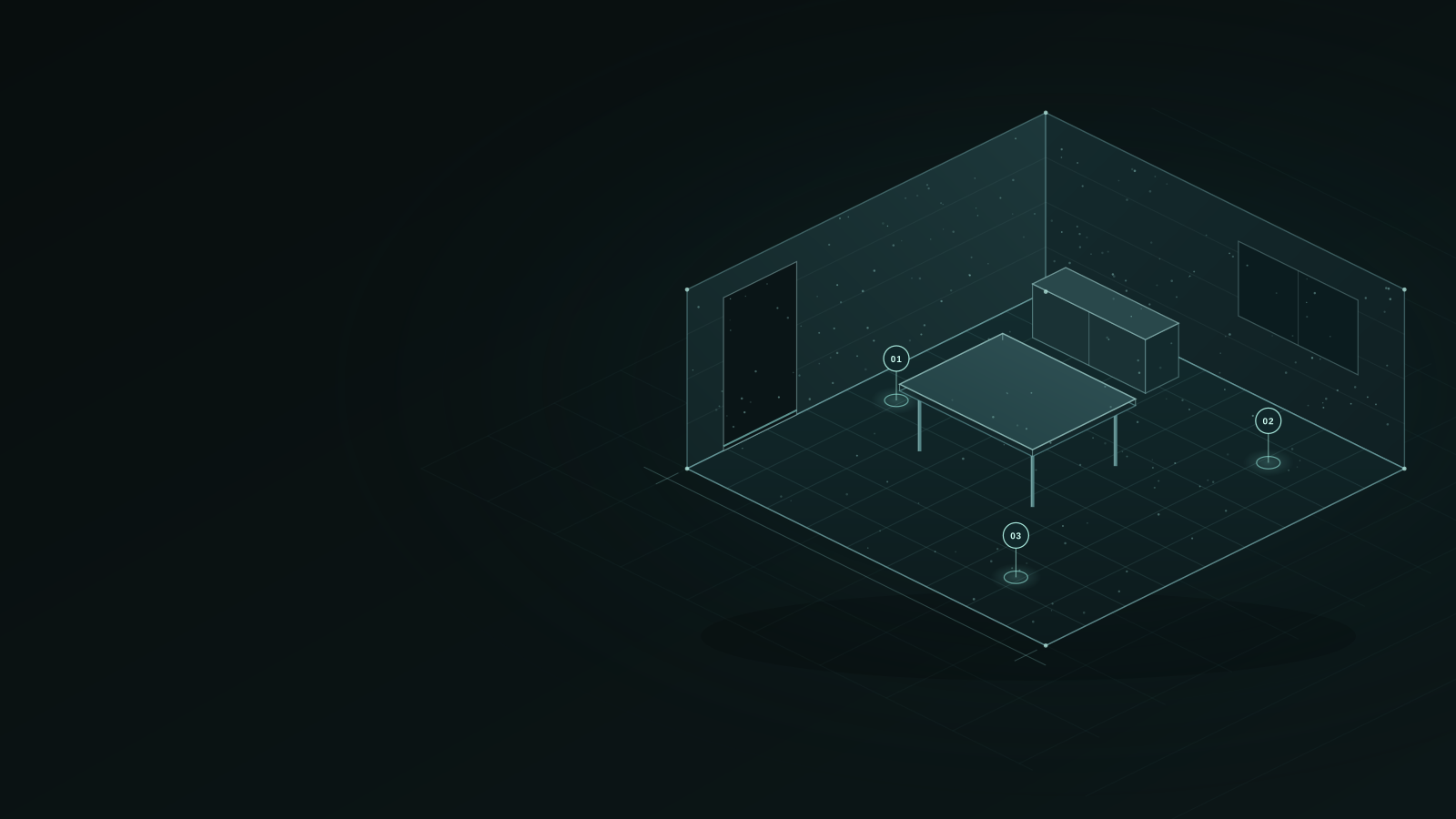
From source to scene
We agree the source material, level of detail and review process with your team before building the scene.
Review the available photographs, plans, measurements and scan data. Define the purpose, coverage and any gaps in the source material.
Build the layout and relevant objects in 3D, using the supplied references to establish their positions and scale.
Review the reconstruction with your team, record assumptions and refine the scene against the available information.
Prepare the agreed views, walkthroughs or animations, with annotations that make the scene clear to the intended audience.
The outcome
Possibilities in practice
Ways a reconstruction can help people explore and understand a scene.
Bring rooms, access routes and relevant object positions into one visual model, with views that help explain their spatial relationships.
Use annotated views or animation to present an agreed sequence, keeping supplied information and illustrative assumptions clearly identified.
Create an environment that teams can return to for guided learning, discussion and scene familiarisation.
Share a consistent visual reference so a team can discuss the scene and request specific views or revisions.
Connected services
Share the type of scene, the reference material available and how you want to present it.
Start a conversation